
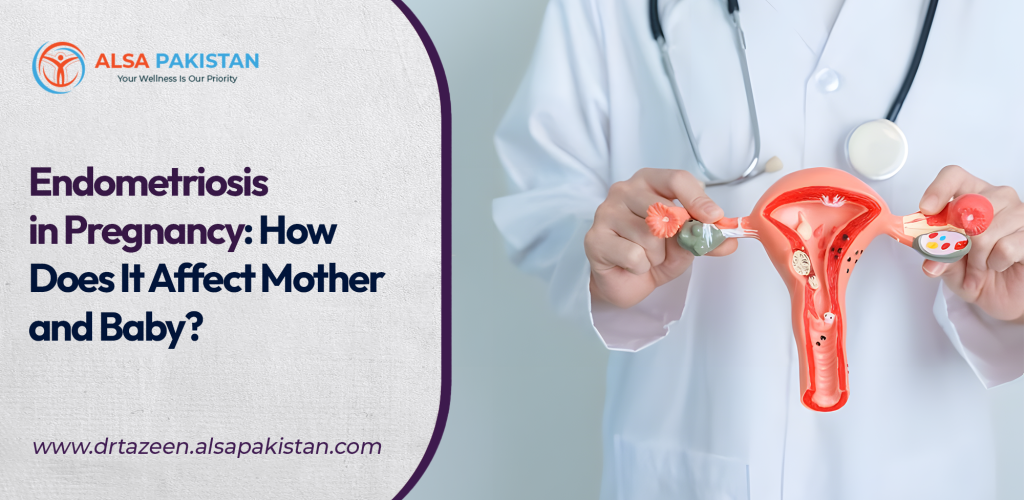
Many endometriosis patients who have been waiting for a long time to see their pregnancy test turn out positive know that it brings another set of concerns. Will the pain subside? Is it safe for the child? How will the disease progress after the birth?
Endometriosis in pregnancy may provide relief from symptoms for some women and cause new symptoms for others. It also slightly increases the risk of a few possible complications.
Despite the additional complications posed by endometriosis, the initial consultation with Dr. Tazeen Ashraf helps moms get the best possible care without compromising the safety of their fetus. This article describes the scientific data about the impact on the health of the woman and the baby, changes in endometriosis treatment after conception, and what to expect after delivery.
Endometriosis refers to a situation where tissue that resembles the womb lining begins growing outside it, especially in places like the ovaries, bowel, and pelvis. It’s common among about 10% of all women of reproductive age. The major symptoms associated with this condition are pelvic pain, painful menstrual periods, and fertility problems.
Women experiencing difficulty conceiving due to endometriosis can consult a gynecologist about suitable options for infertility treatment, based on their individual reproductive health needs.
But pregnancy brings surprises in a variety of ways. Most women feel better, especially toward the later months. This is because menstruation stops and the level of progesterone increases to help keep endometriosis tissue quiet.
Some women experience more symptoms, especially during the first trimester of pregnancy. During this stage, the uterus grows rapidly and pulls on scar tissue and adhesions caused by endometriosis. Increased levels of estrogen may also have the effect of stimulating the tissue temporarily.
Early pregnancy shifts:
The uterus grows and gets stretched out by the bands of scar tissue caused by the disease and previous surgery. This will cause tugging or pulling pains.
Painful ligaments:
The uterine ligaments that hold the baby get stretched as the baby develops, usually in the second trimester.
Digestive discomfort:
The pregnancy hormones cause constipation and bloating in almost all pregnant women. When endometriosis affects the colon, the pain may be intensified.
It is normal for moderate stretching and pulling pains to occur, but sudden and severe abdominal pains call for immediate medical attention. Pregnancy doesn’t heal the disease but gives temporary relief.
Most women with endometriosis have a healthy pregnancy with a baby born without complications. But it has been observed that there is an increased likelihood of certain complications in comparison to women without endometriosis. These factors are especially important to consider with regard to the well-being of the pregnant woman:
Normally, the placenta attaches high on the uterine wall. In placenta previa, it attaches to the bottom of the uterus and partially or fully covers the cervix. Research indicated that the risk was three times higher in women with endometriosis.
The major symptom of placenta previa is bright red vaginal bleeding. So, lower back pain, cramps, or bleeding at any time during pregnancy should be regarded as an indication to see a gynecologist. If a mother has placenta previa, cesarean delivery is required.
There is a higher chance of delivering a baby via cesarean section in case of endometriosis. Such increased risk can be influenced by placenta previa and previous surgeries on pelvic organs performed before conception, such as for endometriosis.
Women who have previously undergone surgery as an endometriosis treatment or who have become pregnant with the help of infertility treatments can be at increased risk due to these factors. Endometriosis can also be associated with changes in menstrual bleeding and understanding the reasons for irregular periods can help women to better understand their menstrual health.
Studies also show that women might have increased blood pressure due to endometriosis. But this aspect needs further research. Blood pressure monitoring ensures any variations are noticed promptly.
Most babies delivered by women with endometriosis are healthy. Major risks associated with the baby are as follows:
The first major risk is that the child is born prematurely in some cases. The risk doesn’t mean that all of the babies will be underdeveloped.
A baby born prematurely may require treatment in a neonatal unit, since the lungs and other organs might not be fully developed yet. Inflammation and reduced sensitivity to progesterone are believed to contribute to some of these risks.
Endometriosis is related to a higher risk of spontaneous loss before the third month of pregnancy. There may also be higher chances of ectopic implantation of an embryo outside the uterus (most commonly inside a fallopian tube) in some cases.
It may also be caused by scars around the fallopian tubes. Early ultrasound examination confirms whether the fetus is developing inside or outside the womb. Women concerned about pregnancy loss should understand the warning signs of miscarriage and know when to seek medical advice. Recognizing the symptoms of miscarriage can help them identify potential warning signs and seek timely medical attention.
There is a slight possibility of lower gestational weight in the baby, which means that it may be slightly smaller than usual for the weeks of pregnancy. But again, it doesn’t happen with every baby.
| Possible issue | What research suggests | What it means for care |
|---|---|---|
| Miscarriage | Higher odds, mostly early on | Early scans and prompt reporting of bleeding |
| Preterm birth | About 1.6 times the odds | Watch for early labor signs |
| Placenta previa | About three times the odds | Placenta position checked on ultrasound |
| Small baby | Slightly higher odds | Growth scans |
| Cesarean delivery | Higher odds | Birth plan discussed ahead of time |
The typical treatment of endometriosis involves the use of hormones like contraceptive pills, progestin therapy, and hormonal coils, in addition to painkillers. Hormonal therapy works by inhibiting the ovulation process and menstrual periods, which is contrary to the needs when conception is attempted.
Gynecologists generally advise stopping hormonal treatment before pregnancy. There is no known harm to the mother or baby in case of accidental exposure to progestin-only or combination pills. But these methods aren’t suitable for use when a woman is pregnant. Intrauterine devices are also not safe for use during pregnancy.
Surgery to remove endometriosis lesions and scar tissue may be recommended by a gynecologist before trying to conceive. Surgery has its own risks and doesn’t suit everyone. Women considering treatment before pregnancy can consult a gynecologist about suitable options for endometriosis treatment in Lahore, based on their symptoms and reproductive plans.
In the case of pregnancy, endometriosis treatment changes to focus on comfort and safety:
Pain medication must never be started or stopped before consultation with the doctor. Women should note that many commonly used medications that are safe otherwise become unsafe during pregnancy.
Endometriosis in pregnancy is not considered a high-risk pregnancy in itself, but still, the expecting mother should be careful. The best solution would be to inform the specialists about the problem and endometriosis treatment right from the start. It will help to plan the ultrasound, view the placental site, and monitor the degree of development and blood pressure control.
If there is endometriosis in pregnancy with pain, a gynecologist will first have to establish the cause of the pain: whether it’s a regular pregnancy change, an ovarian cyst, or an emergency. For endometriosis in pregnancy, consult a specialist immediately in case of:
Endometriosis during pregnancy can affect each woman differently. Some women experience symptom relief, while others may have increased pain, but most go on to deliver healthy babies.
Research suggests that endometriosis may increase the risk of miscarriage, premature delivery, placenta previa, and cesarean delivery. Understanding common women’s health issues, including endometriosis, can help women recognize potential risks and seek timely medical care.
Early prenatal visits and regular consultations with a qualified gynecologist are essential for monitoring maternal and fetal health. Expectant mothers can consult Dr. Tazeen Ashraf in Lahore for personalized guidance and pregnancy-safe endometriosis management throughout their pregnancy.